Cassia the Unbroken
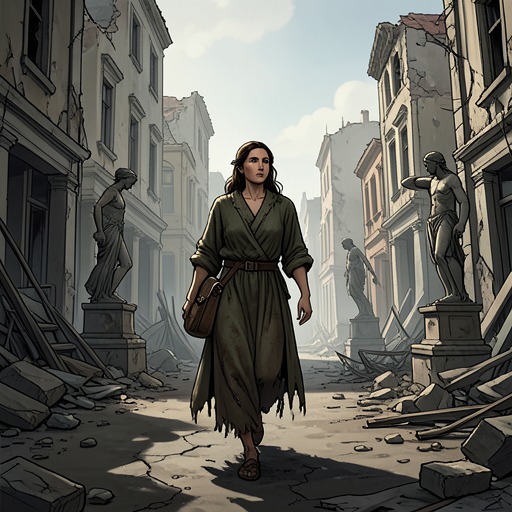
The Calamitous BobCassia the Unbroken is a legendary priestess of Neriad whose life, death, and continuing presence give the ruined Harrakan Empire one of its clearest surviving images of sacred purpose. She defended the Empire and the other nations of the continent, was universally loved, and left behind more than a revered memory: after her death, the ground opened and became the Cassian Spring, whose waters still carry Neriad’s blessing. Centuries later, that spring preserves her influence materially, spiritually, and narratively, becoming the reason Viviane Saint-Lys survives a landscape otherwise defined by monsters, black mana, thirst, and irreversible decay.
Identity and Sacred Legacy
Cassia is identified as a legendary priestess of Neriad, the god of courage and purity. Her significance therefore exceeds military or political service. She fought for the Harrakan Empire, but her cause was not confined to one state; she also fought for the other nations of the continent. The account presents her as universally loved, a figure whose loyalty crossed national boundaries and whose reputation survived the catastrophe that destroyed the civilization she had served.
Her title, Cassia the Unbroken, is matched by the shape of the legacy attributed to her. The text does not describe a brief martyrdom or an isolated heroic gesture, but a very long and fulfilling life followed by death after her purpose had been completed. That fullness matters: her sanctity arises not only from sacrifice, but from endurance, service, and the successful completion of a life devoted to courage and purity.
The Cassian Spring
When Cassia died, the ground opened and a spring emerged. The event binds her bodily remains to a permanent source of renewal. The Cassian Spring is not merely a memorial built by later generations; it is the physical continuation of her death, and its waters retain Neriad’s blessing to the present day. In a world where the Deadlands offer no rain, no dried grass, and no renewable food source, the spring stands as an ecological and spiritual contradiction to the surrounding wasteland.
Viviane Saint-Lys encounters Cassia in an alcove dug into the back of the cave behind the spring’s vapor. The remains sit in a lotus position beneath a veil. The posture initially suggests someone presiding over a banquet or a board-room meeting, an impression of authority that survives even when Viv recognizes that the figure is a body. Cassia’s physical stillness is therefore not presented as simple decay. Her remains radiate serenity and majesty, carrying the sense of a purpose fulfilled and a rest fully deserved.
The cave also functions as a surviving pocket of the old Harrakan world. Viviane Saint-Lys has become accustomed to monsters, wastes, and ruins, and has nearly forgotten that the creatures and broken structures around her once belonged to a flourishing people with a vibrant culture. Cassia’s shrine is one of the small pearls of that vanished existence. It demonstrates that the Empire’s history has not disappeared completely; fragments of its values remain embedded in places that have outlasted its institutions.
Influence on Viviane Saint-Lys
Cassia’s first direct effect on Viviane Saint-Lys is practical and immediate. Viviane is trapped in an environment where staying means death from the combined threats of monsters, starvation, and lack of water. The spring offers more than temporary relief. Its waters restore Viviane’s body: after emerging from them, her skin no longer feels as dry, and even the thin fuzz beginning to cover her scalp suggests renewed vitality. The sanctuary thus turns a survival crisis into a possible route forward.
The spring’s protection also has a psychological dimension. In meditation, Viviane Saint-Lys feels welcomed and protected, and Cassia becomes one of the few presences in the Deadlands that seems to care for her. Solfis speaks of the remains with the reverence he normally reserves for deities, reinforcing the sense that Cassia is not simply an artifact of a lost age. Her presence offers Viviane a relationship with a past she had previously experienced mainly as danger and ruin.
Before leaving, Viviane returns to the spring one final time and stands before the veiled mummy. Cassia’s presence feels like a physical weight on Viviane’s mind, but it does not crush her; it humbles her. The remains remind Viviane of the heights an individual can attain and of the possibility that deeds can reach the gods. Viviane recognizes that she is alive because of what Cassia did centuries earlier, becoming one more soul grasped from the depths long after the fall of the Empire. Her farewell is therefore an acknowledgment of inherited rescue, not merely gratitude for water.
Viviane thanks Cassia for saving her and also addresses Neriad. No spoken answer follows. What remains is the comforting presence, and that silence is sufficient. Cassia’s influence does not depend on an apparition, explanation, or command. It operates through the spring, the atmosphere of protection, and Viviane’s changed understanding of what a single life can leave behind.
Contrast with the Deadlands
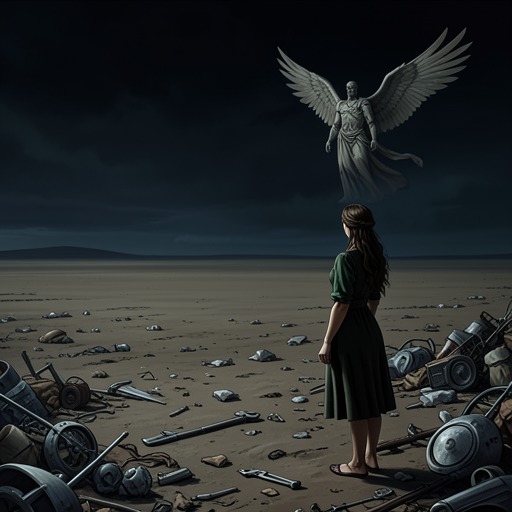
Cassia’s legacy gains force through its opposition to the surrounding ecology. The camp and ruins around Viviane reveal a place where rain never falls, where shelter matters because water is absent rather than abundant, and where no renewable food source survives. The Deadlands are sustained by a grim equilibrium: undead monsters generate their own black field, and the black mana density remains so persistent that kingdoms would need several large-scale expeditions to reduce it, followed by decades of recovery. Against this closed cycle of death, the Cassian Spring provides a living and replenishing force.
As Viviane and her companions approach the gap in the mountains, the landscape begins to change. Green forest becomes visible beyond the fading black mana, and the plains contain dark shrubbery as well as zombies. Later, near Kazar, free land is reached in only twenty minutes; grass, loam, sap, and ordinary deciduous trees replace the oppressive deadland environment. Cassia’s spring belongs to the earlier threshold between these conditions. It is a small, sacred instance of life surviving inside the larger system of decay, and its blessing helps make Viviane’s eventual movement toward living land possible.
Narrative Significance
Cassia the Unbroken embodies the book’s contrast between the collapse of institutions and the persistence of individual action. The Harrakan Empire has fallen, its heartlands are saturated with black mana, and its remaining monuments are surrounded by undead creatures. Yet Cassia’s service continues to produce effects: her death creates the spring, the spring preserves Neriad’s blessing, and that blessing saves a traveler from another age. The imperial past is therefore not wholly vindicated or restored, but neither is it empty. Its surviving meaning is carried through a local, tangible inheritance.
Her appearance also transforms the usual meaning of a ruin. The cave does not only conceal a corpse; it shelters a continuing source of water, memory, and moral orientation. Cassia’s body is motionless, but the consequences of her life remain active. Through Viviane Saint-Lys’s response, the character becomes a measure of human possibility within a post-cataclysmic world: one person may not prevent history’s destruction, yet courage, purity, and sustained service can outlast an empire and reach strangers centuries after the original struggle has ended.